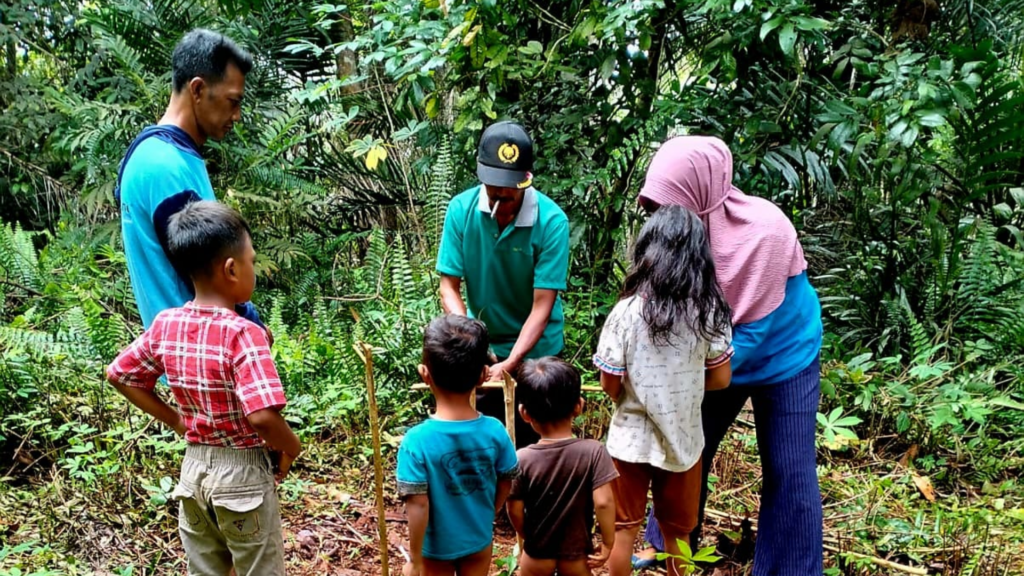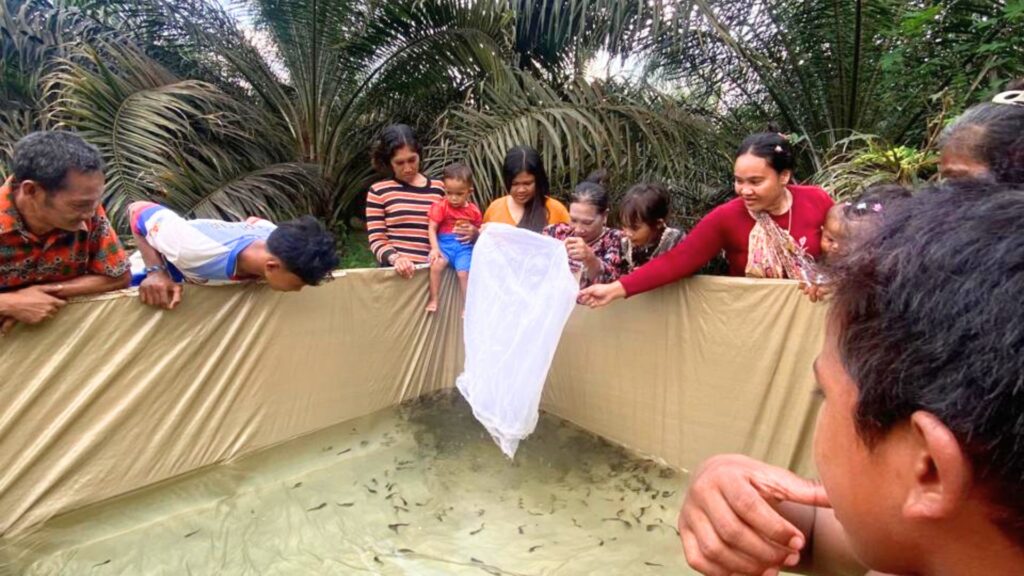
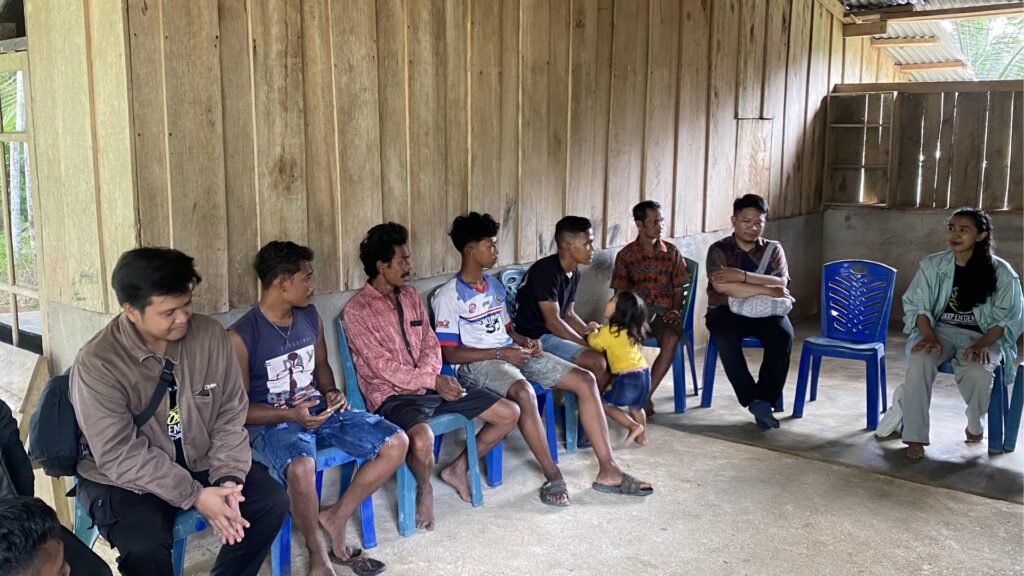
Who decides what people eat when the forest can no longer decide for them? This question guided our time sitting together in a circle in Jambi, where DEEP EnGender researchers, a SAD facilitator, village officials from Lantak Seribu, the Tumenggung, the Induk SAD, and community members gathered without hierarchy. People began by speaking about what has changed. Hunting, once reliable, is no longer certain. Forest paths have disappeared or become inaccessible. These were not framed as problems to be quickly solved, but as realities to be collectively understood. As the discussion deepened, women’s voices shifted the focus toward everyday life such as what is cooked, what is accepted, what children will eat, and what remains possible. In that moment, food becomes something grounded in care, practice, and continuity.
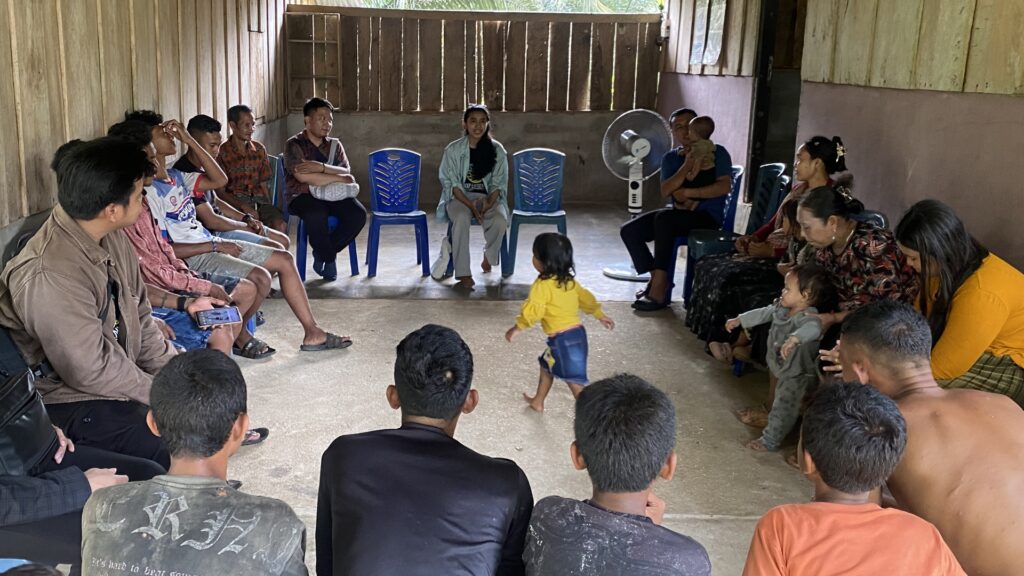
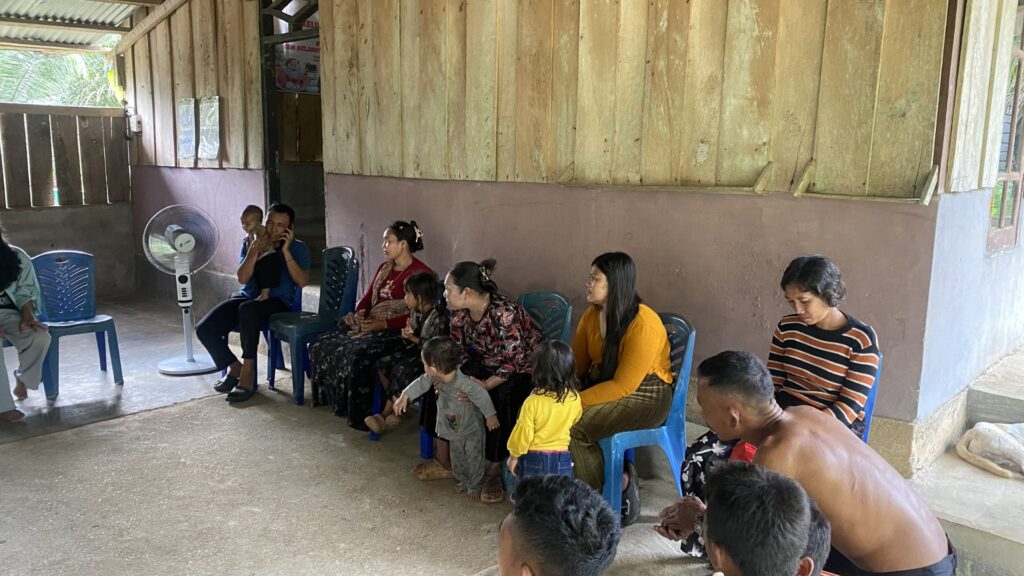
No one rushed to offer solutions. The facilitator, Mas Trophy, held the flow of conversation, allowing pauses and returns. Representatives of village officials listened without directing, and our team followed rather than led. Authority moved within the circle, shared between customary leaders, women, and community members, each shaping the direction in their own way. Ideas emerged slowly, tested through discussion rather than imposed, ensuring that any path forward remained rooted in the community itself. What took shape is a way of deciding that values listening over instruction and collective reflection over speed. In the end, food sovereignty is not only about what is eaten, but about who has the power to decide, and in this circle, in this dialogue, that power is shared.
Highlights
- Food sovereignty is shaped through collective decision-making, not imposed solutions.
- The circle redistributes authority across community members, leaders, and women.
- Everyday knowledge, especially from women, grounds what is possible.
- Dialogue manifests a method, the process through which change takes form.