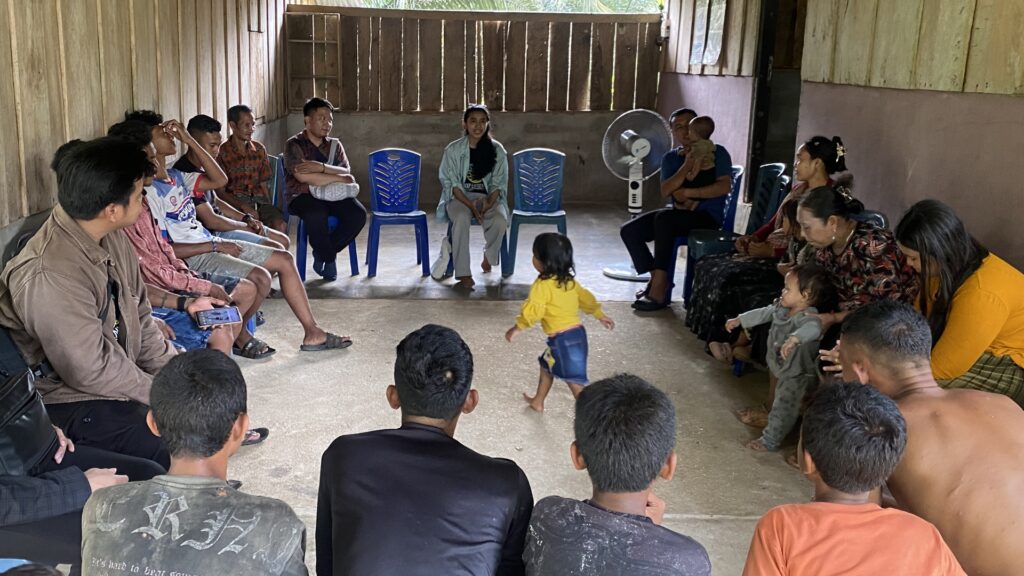
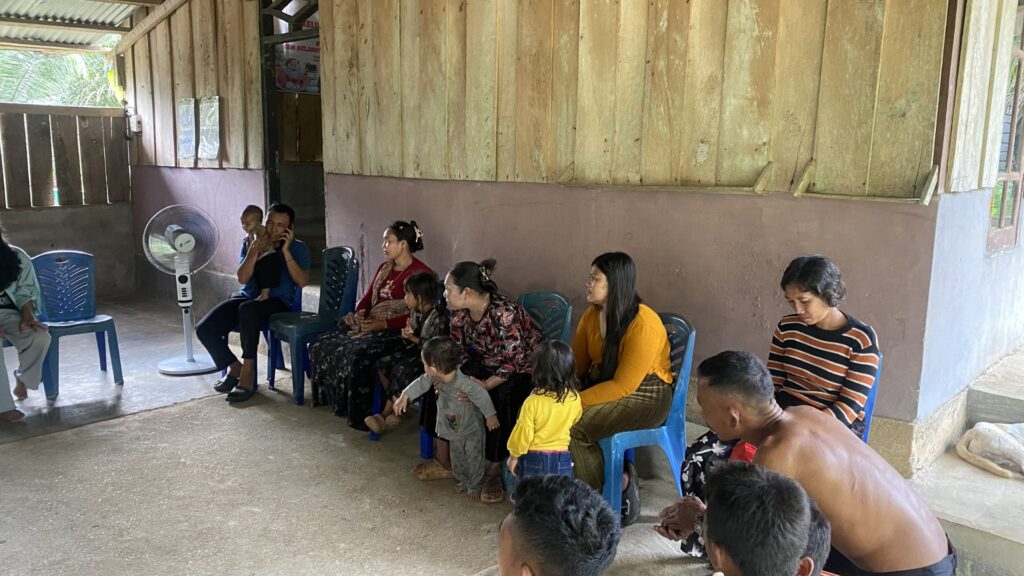
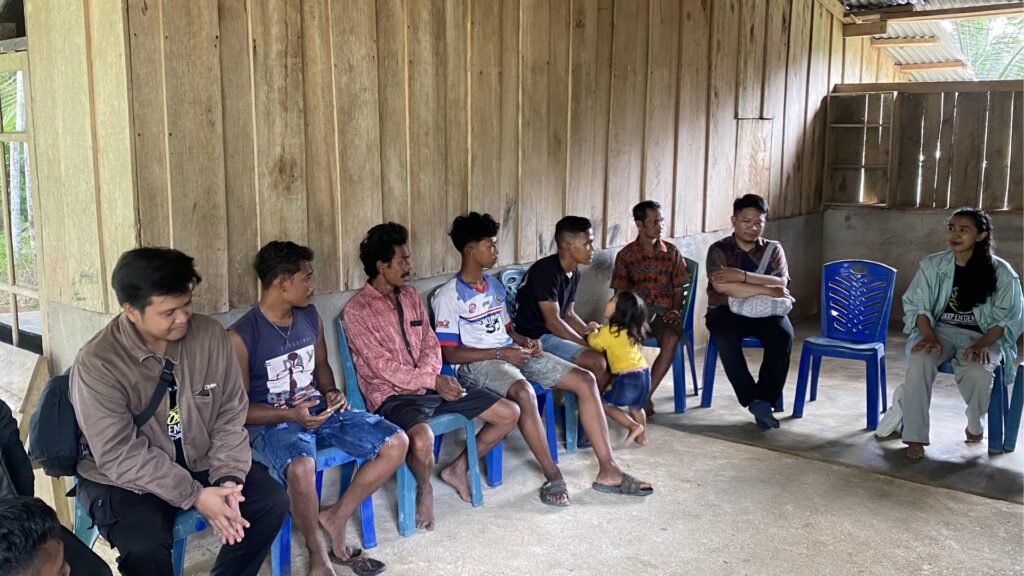
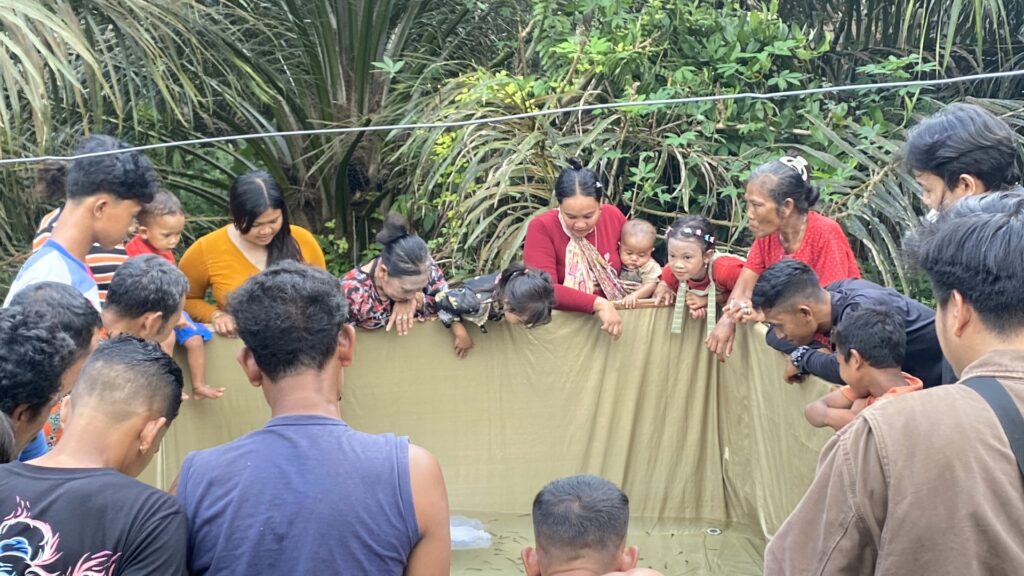
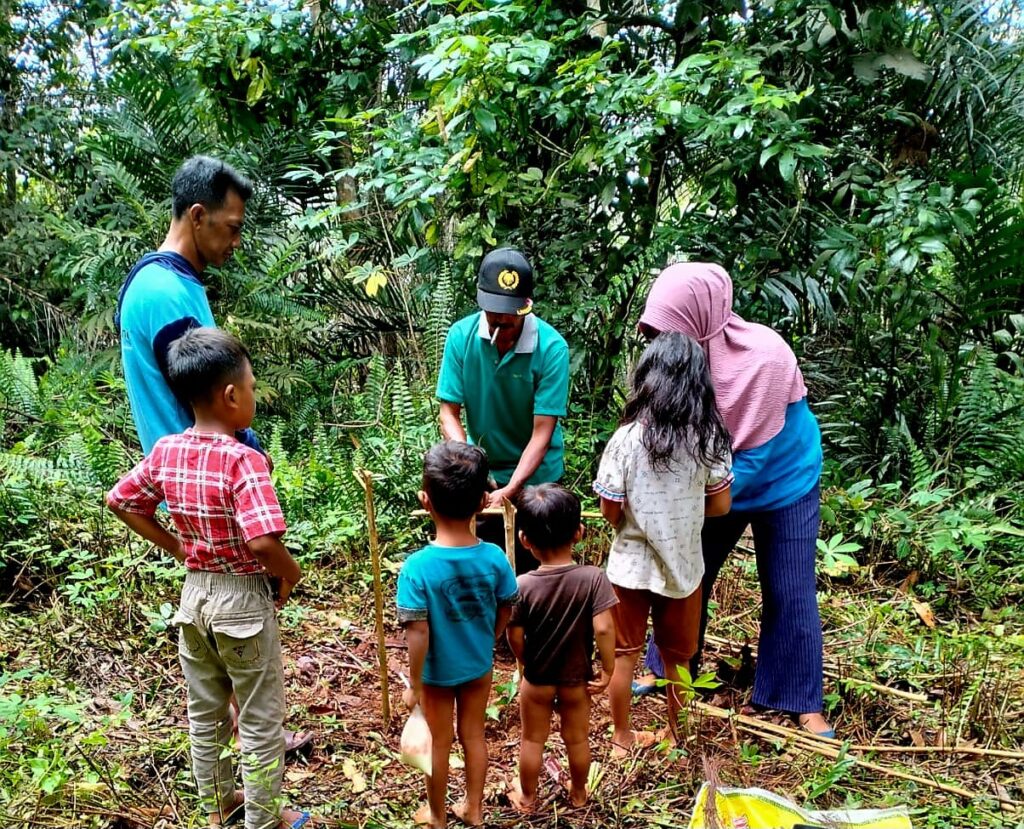
Who decides what people eat when the forest can no longer decide for them? This question guided our time sitting together in a circle in Jambi, where DEEP EnGender researchers, a SAD facilitator, village officials from Lantak Seribu, the Tumenggung, the Induk SAD, and community members gathered without hierarchy. People began by speaking about what has changed. Hunting, once reliable, is no longer certain. Forest paths have disappeared or become inaccessible. These were not framed as problems to be quickly solved, but as realities to be collectively understood. As the discussion deepened, women’s voices shifted the focus toward everyday life such as what is cooked, what is accepted, what children will eat, and what remains possible.In that moment, food becomes something grounded in care, practice, and continuity.
No one rushed to offer solutions. The facilitator, Mas Trophy, held the flow of conversation, allowing pauses and returns. Representatives of village officials listened without directing, and our team followed rather than led. Authority moved within the circle, shared between customary leaders, women, and community members, each shaping the direction in their own way. Ideas emerged slowly, tested through discussion rather than imposed, ensuring that any path forward remained rooted in the community itself. What took shape is a way of deciding that values listening over instruction and collective reflection over speed. In the end, food sovereignty is not only about what is eaten, but about who has the power to decide, and in this circle, in this dialogue, that power is shared.
Highlights
Food sovereignty is shaped through collective decision-making, not imposed solutions.
The circle redistributes authority across community members, leaders, and women.
Everyday knowledge, especially from women, grounds what is possible.
Dialogue manifests a method, the process through which change takes form.
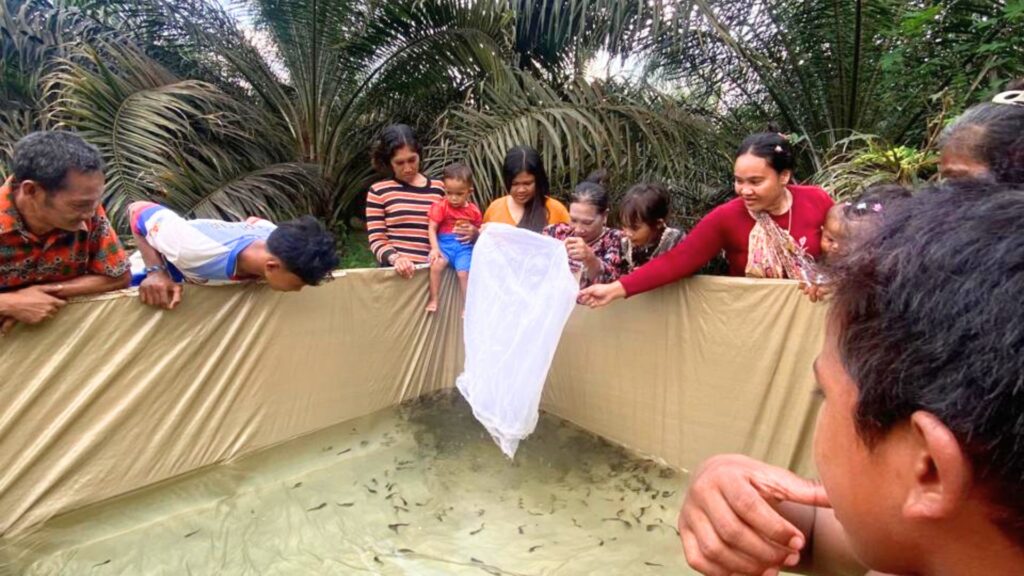
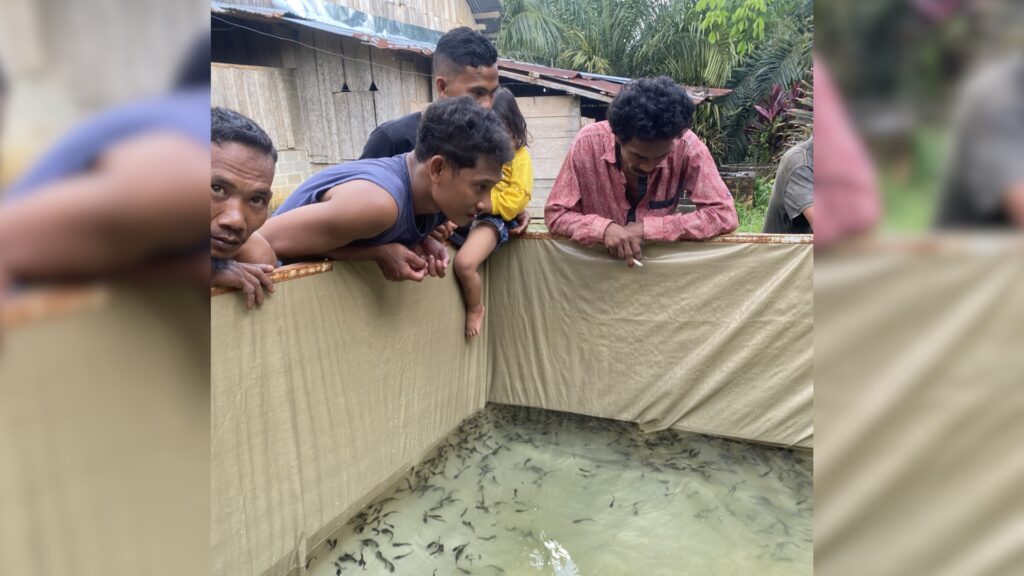
It was a sunny Friday morning in April 2026 when a new, empty pond was first unveiled in the Lantak Seribu village, one young man grinned and joked in Indonesian, “Wah, kolamnya cocok untuk beradu ayam!” (This pond looks made for a cockfight), he laughed. We joined in the laughter. At that moment, the pond was nothing practical, not yet a source of food or livelihood. It was just an unfamiliar patch of water in the ground. It felt out of place. And that mattered.
The setting is Jambi, on the island of Sumatra, where the land has already been reshaped. For the Suku Anak Dalam (SAD) (literally the Children of the Forest) the jungle was more than just land. It was a living pantry, a library of knowledge, and the heart of their identity. Hunting wild game, gathering fruits and roots, moving with the seasons of the forest – these weren’t mere chores. They were the SAD way of life itself. But the forest isn’t as it once was. Oil palm plantations have crept into their territory, swallowing trees and pathways. As the green depths of the jungle give way to rows of palms, many SAD families can no longer reach the groves and streams where they once hunted and foraged. It’s not just fish and game that are lost. It’s autonomy, the freedom to choose how to feed themselves and live by their own traditions.
When our team from DEEP EnGender began working on our new project called Digital Re-Grow Initiative with the SAD communities here, we didn’t walk in with ready-made answers or blueprints. We came with questions, and with open ears. We spent time in the village not rushing from project to project, but sitting in the shade listening to stories. We talked with everyone, the young men and women, the Induk (the female elders), and the Tumenggung (the community’s chief). Through their stories of change, of loss, of how they adapt each day, a shared concern emerged: How could they respond to the shrinking forest without sacrificing their dignity, their knowledge, and their collective agency?
Suddenly, quoting Virginia Woolf that everything came back to food. In a place where the old forest ways were disappearing, what could be grown or raised? What made sense not only economically but culturally? Together, we asked ourselves: What food project would the community accept as their own? We heard about the crops and animals they knew, but one idea kept surfacing. The SAD people didn’t normally count on fish for meals, except for one familiar kind: the catfish, or lele. It’s a fish they know and like, a fish that felt possible in these circumstances. So the idea of the pond took root. But this was not an outsider saying “Here is your solution.” It was a conversation we shaped together. Through ongoing talks with village leaders and the government, a collective plan emerged: build a catfish pond together. In the end, we prepared the pond and stocked it with two thousand catfish seedlings. Twenty-four SAD households shared in taking care of the pond. Notice how leadership came about: it was not imposed by us, or by distant experts. It came from within the community guided by the Tumenggung, the Induk SAD, and local coordinators from the village.
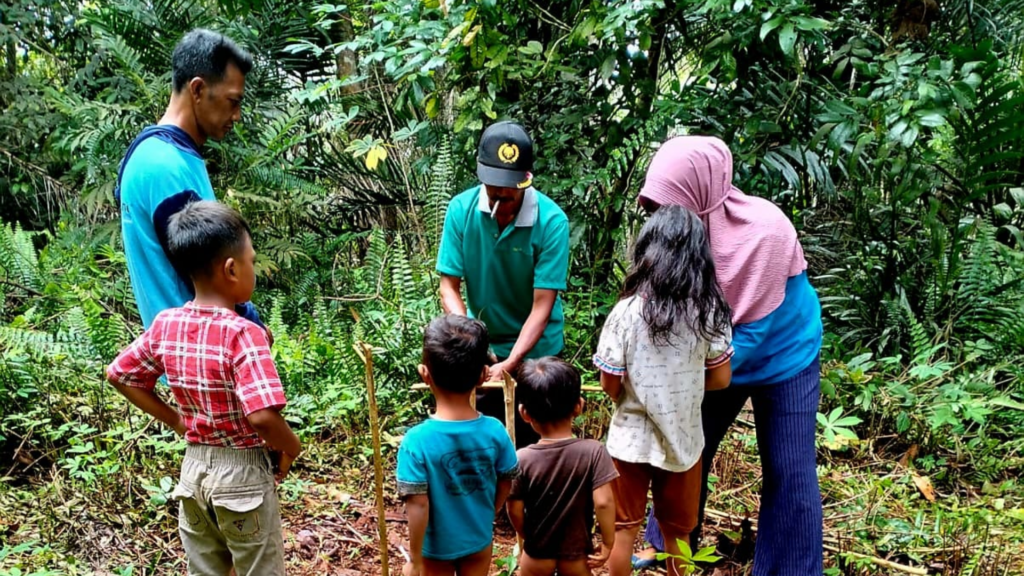
And yet, the pond itself was only half the story. What truly matters is how it happened. We didn’t run one-way trainings or hand down a rulebook. Instead, we organized simple workshops as circles of exchange. In those circles, modern fish-farming techniques met the community’s own ecological wisdom. Every practice was put on the table to discuss: no assumption was made. A conversation might go like this: a scientist explains a method, and then an elder raises her hand to add, “In my childhood, I remember this way might fit here.” We all learned together: the SAD, our DEEP EnGender team, and the local officials.
This was indeed a manifestation of DEEP EnGender value where decolonization is in action.There was not just buzzwords, but practice. It meant choosing to listen instead of dictating, recognizing that knowledge doesn’t only flow from universities; it lives in people’s daily lives. In this project, we made space for voices that are often overlooked: women, youth, and the people whose everyday experience is this village. For example, when a young mother spoke up about which plants she grows in her garden or an Induk told a memory of fishing in a nearby stream, those insights mattered. We honored those ideas as much as any technical advice we brought. That’s also how a feminist approach works: by centering those voices in the decision-making.
Even the laughter by the pond “cockfight pond!” was part of the process. It was a way for everyone to test ideas, to joke and question something new together. In fact, seeing how the community responded with curiosity and humor helped shape our path forward. Now, the pond has turned into a space of negotiation and possibility. The village government has promised to visit every month, to sit together and discuss how it’s going. This ensures the pond project isn’t a one-time gift from outsiders, but an evolving journey led by the people who live with it. The catfish are still growing in that pond. And something else is growing, too. A new way of working together. A different way of imagining indigenous food systems – not as things to be replaced by outside ideas, but as living traditions that can adapt on their own terms, even when much is lost. Rebuilding a future here is about holding space for what still remains, for what is changing, and for what can emerge next, together.
The main goal of the Sustainable Agriculture Revitalization Program (SARP) was to help Indigenous SAD communities. It did this by teaching them and supporting small-scale farming methods. The program aimed to improve food security in Jambi while encouraging sustainable farming and protecting the culture of these communities.
In the past, Indigenous SAD communities lived by hunting animals and gathering plants from the forest to meet their needs, rather than practicing settled farming. Their way of life was deeply connected to the forest, which provided everything they needed for survival. However, over time, outside forces disrupted this way of life. One major issue was being forced to leave their ancestral lands, which not only removed them from the forest but also made it difficult for them to pass down their traditional knowledge to future generations.
This loss of connection to their land and traditions led to a decline in their understanding of farming practices, which were already limited due to their focus on hunting and gathering. The forced displacement also weakened their cultural identity and community bonds, making it harder for them to adapt to new challenges. As a result, they began to lose both their indigenous agricultural knowledge and their cultural practices, leaving their communities in a vulnerable position.
In response to these problems, DEEP EnGender worked diligently to bring back small-scale farming to help Indigenous SAD communities. The goal was to reconnect them with farming, which could provide a steady source of food and improve food security in Jambi. These efforts focused on addressing the loss of traditional knowledge and the challenges caused by displacement and cultural changes.
SARP played a key role by offering targeted support, education, and farming tools. The program worked to teach the communities simple but effective farming methods that could be easily adopted. This not only helped improve their daily lives by providing more reliable food sources but also supported their independence and ability to take care of their families.