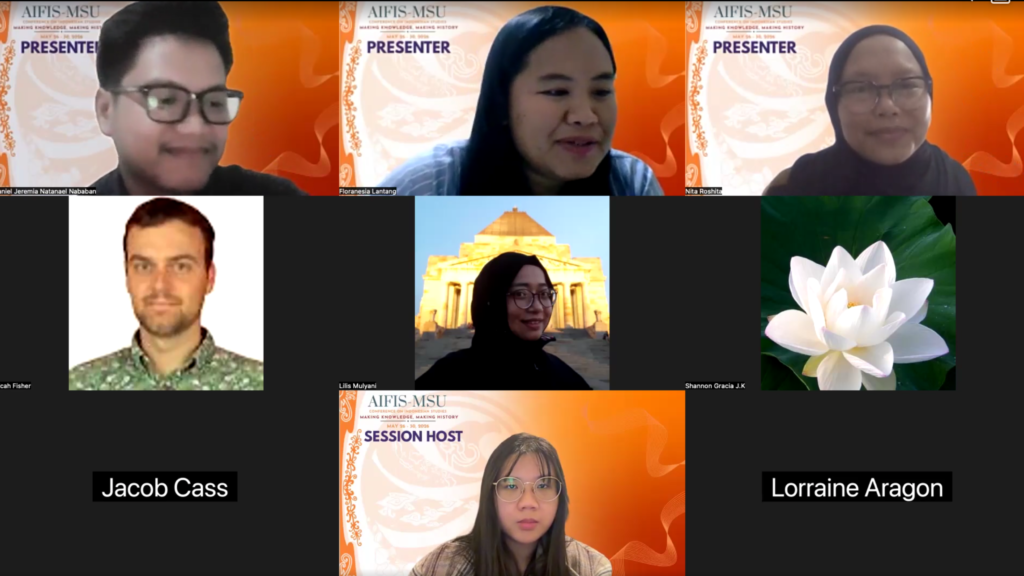
DEEP EnGender participated in the AIFIS–MSU Conference on Indonesian Studies 2026, “Making Knowledge, Making History: Producing the Indonesian Past, Present and Future” (26–30 May 2026), organized by the American Institute for Indonesian Studies (AIFIS) and Michigan State University. The conference brought together scholars, researchers, and practitioners to examine how knowledge about Indonesia is produced, contested, and transformed across different social, political, and historical contexts.
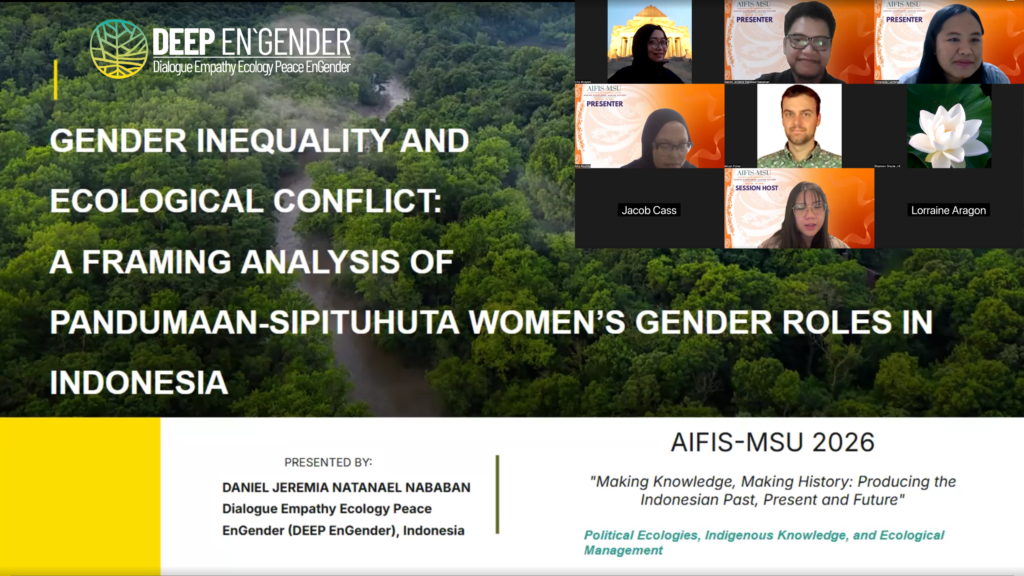
Within this space of critical dialogue, Daniel Jeremia Natanael Nababan (Researcher, DEEP EnGender) presented a paper examining the representation of Indigenous women in news coverage of the ecological conflict between the Pandumaan–Sipituhuta communities and PT Toba Pulp Lestari (PT TPL) in North Sumatra. The research explored how environmental conflicts are not only struggles over land and natural resources, but also sites where gendered inequalities are produced, maintained, and challenged.
Drawing on media framing analysis, the study highlighted how Indigenous women continue to experience multiple forms of exclusion, including marginalization, subordination, increased burdens of care and livelihood, violence, and stereotyping. At the same time, the research demonstrated how Indigenous women have actively participated in defending customary forests, sustaining community livelihoods, and shaping collective resistance, despite their contributions often remaining underrepresented in dominant media narratives.
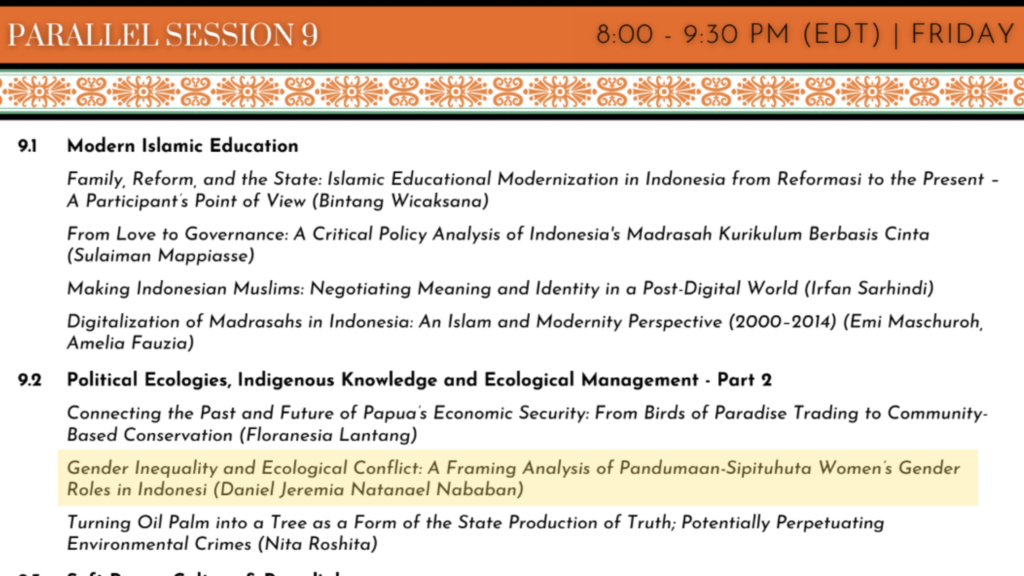
Across conference sessions and discussions, recurring questions emerged regarding whose knowledge is recognized, whose experiences are made visible, and whose voices continue to be marginalized within public discourse. These conversations resonate strongly with DEEP EnGender’s commitment to advancing research and advocacy that center Indigenous perspectives, gender justice, and community-based knowledge in addressing environmental challenges.
Insights from this conference will contribute to DEEP EnGender’s ongoing research, organizational learning, and public-facing knowledge production. Participation in AIFIS–MSU 2026 further strengthens our commitment to supporting more inclusive forms of knowledge that recognize the experiences, agency, and leadership of communities at the forefront of ecological and social transformation.